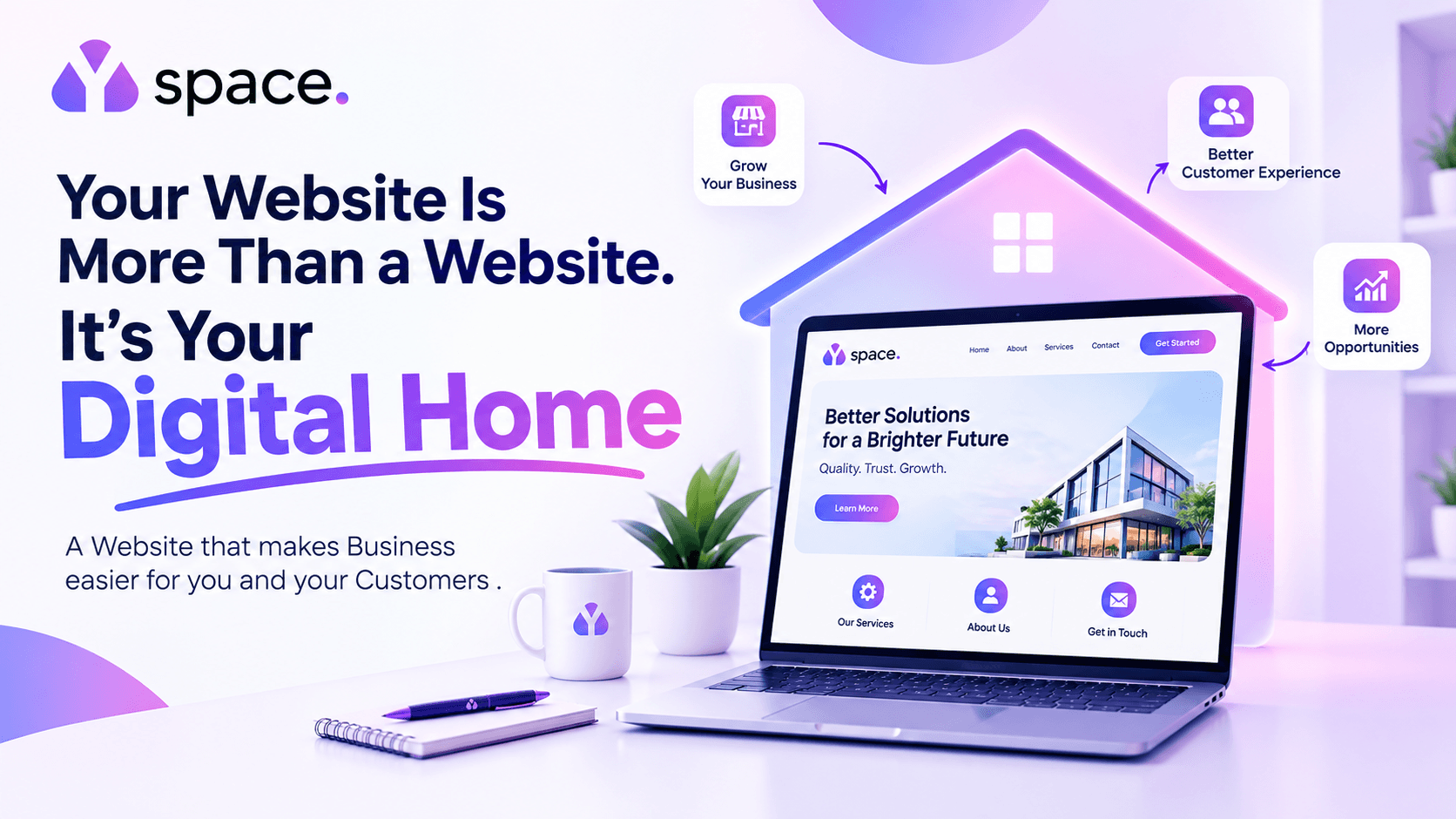
Imagine a customer wants to book your service, check your products, or find answers to a few simple questions. It's 10 PM, your business is closed, and nobody is available to respond.
Does the customer have to wait until tomorrow?
Not necessarily.
If your website is designed to do more than display information, your customer can explore your services, find answers, submit an enquiry, or take the next step whenever it's convenient for them.
That's what makes a website more than a website. It's your digital home—a space where your business remains accessible, even when you're not around.
More Than Four Walls and a Homepage
Think about your physical home. Different spaces serve different purposes. There's a place to relax, a place to work, and a place to welcome visitors.
Your website can work in a similar way.
Your homepage introduces visitors to your business. Your services page explains what you offer. Your portfolio showcases your work. Your FAQ section answers common questions, while your contact page helps people reach you.
Every page has a purpose.
When these pages work together, visitors don't have to search through multiple platforms or send messages just to find basic information.
A good website doesn't make visitors figure everything out. It makes the information they need easy to find.
Let Your Website Handle the Repetitive Questions
If you run a business, you've probably answered the same questions countless times.
“What services do you provide?”
“Where are you located?”
“How can I book an appointment?”
“What are your working hours?”
Answering these questions is part of running a business. But imagine how much easier things could be if customers could find these details themselves.
Your website can handle many routine information needs before a conversation even begins.
For service-based businesses, appointment forms can collect booking requests. For product-based businesses, product pages can explain features and specifications. For professional services, enquiry forms can gather the details needed to start a discussion.
This doesn't replace human interaction. It gives you more time to focus on the conversations that actually need your attention.
Your Digital Home Should Be Easy to Navigate
Have you ever entered a building and struggled to find the room you needed?
A confusing website creates the same frustration.
Visitors shouldn't have to click through five pages to find your phone number or guess where to go to request a quotation.
Good website functionality starts with simple decisions:
- Clear navigation: Make important pages easy to locate.
- Useful forms: Ask only for the information you need.
- Accessible contact details: Let visitors reach you without unnecessary steps.
- Mobile-friendly layouts: Make browsing comfortable on smaller screens.
- Regular updates: Keep services, prices, timings, and other details current.
These details may seem small, but together they can make the difference between a frustrating visit and a useful experience.
Make Room for Your Business to Grow
Your business today might offer three services. Next year, you might expand into new locations, introduce additional products, or serve a different audience.
A well-planned website can evolve alongside those changes.
You can add service pages, publish helpful articles, introduce booking functionality, build an online store, or create dedicated pages for new offerings.
Instead of rebuilding your online setup every time something changes, you can develop your website as your business needs evolve.
The key is to plan for flexibility from the beginning.
Build a Digital Home That Works for You
At VAI Space, we believe website development should begin with a simple question: What should this website help your business do?
The answer should guide its structure, functionality, and design.
A website shouldn't exist simply because having one is expected. It should make everyday interactions easier, reduce unnecessary steps, and give customers a practical way to engage with your business.
Because your digital home isn't just a collection of pages. It's a space that should work for the people who visit it—and for the business that depends on it.
So, ask yourself: Is your website simply online, or is it actually making things easier for your customers?
It's time to build a digital home with purpose.